

The Empire's selective outrage
How Western leaders condemned Iran's defense but not its bombing

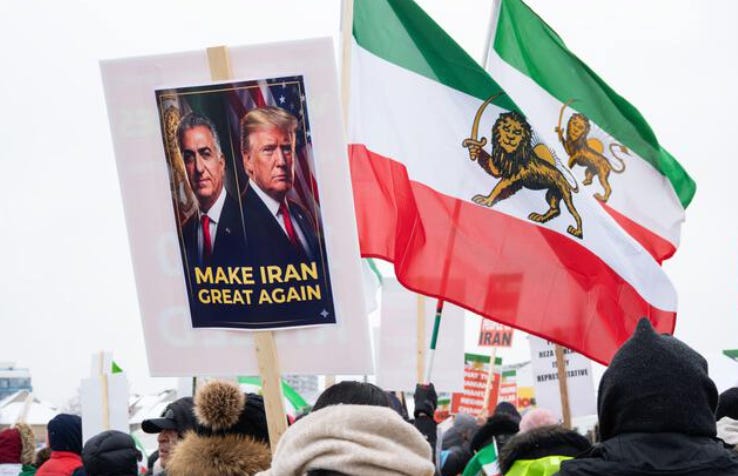
On February 28th, 2026, the United States and Israel launched coordinated airstrikes against Iran, marking what President Donald Trump called a “massive and ongoing operation” against the Islamic Republic. American and Israeli warplanes bombed Tehran and other cities including Isfahan and Tabriz, targeting Iran’s military infrastructure. The attack, dubbed “Operation Epic Fury” by the Pentagon, was launched despite ongoing negotiations in Geneva over Iran’s nuclear program, mediated by Oman.
The timing is striking: this follows almost a month of weekend-long speculation about whether the US would attack, with tensions escalating almost every weekend in what became a cruel game of geopolitical chicken.
Iran retaliated within hours, launching missiles and drones toward Israel and American bases across the Gulf region. The Islamic Revolutionary Guard Corps confirmed strikes on Bahrain (targeting the US Navy’s 5th Fleet headquarters), Qatar (Al Udeid base), Kuwait (Ali al-Salem Air Base), and the United Arab Emirates (Al Dhafra). At least one person was killed in Abu Dhabi from fallen debris.
Within the first 48 hours, credible reports have emerged of civilian casualties, including an elementary school in Minab being attacked, with over 70 people killed—the overwhelming majority of them children. This is what an actual regime change war looks like. These are not “surgical” operations. They are not “defensive.” They are the wholesale slaughter of civilians dressed in the language of security.
Yet what is perhaps most revealing is the reaction of Western leadership. Canadian Prime Minister Mark Carney, British Prime Minister Keir Starmer, and European Commission President Ursula von der Leyen—all have condemned Iran’s retaliatory strikes while remaining largely silent on the original attack. The question must be asked: why does the principle of a country defending its sovereignty suddenly not apply when that country is Iran?
The answer is as old as empire itself. These leaders, regardless of their public statements, are ultimately subject to the kingdom of the United States and its geopolitical wants and needs. The hypocrisy displayed here is one of the most glaring examples of Western power dictating international order. International institutions—from the UN to the ICC—are framed around the will of the US, not actual rules and laws. When the US and Israel strike first, it’s “self-defense” and “eliminating imminent threats.” When Iran fires back in defense of its sovereignty, it’s “inexcusable and unjustifiable” (to quote European Parliament President Roberta Metsola).
Saudi Arabia, the UAE, Kuwait, Qatar, and Bahrain—all countries with significant American military presence—have condemned Iran’s retaliation, with Riyadh warning of “the grave consequences of the continued violation of the sovereignty of states.” Yet none have condemned the original US/Israeli attack that provoked this response. The selective application of international law is a feature of the empire.
The Iranian diaspora celebrating this attack would do well to remember: the bombs that topple regimes do not distinguish between the guilty and the innocent. The schoolchildren of Minab did not choose their government. They did not vote for the Islamic Republic. They were simply in the wrong place at the wrong time, collateral damage in a war that was never about them.