

The Crumbling Shield: How the Iran War Is Exposing the Limits of American Power
The battlefield is being set, and we are plunging headfirst into a new world order

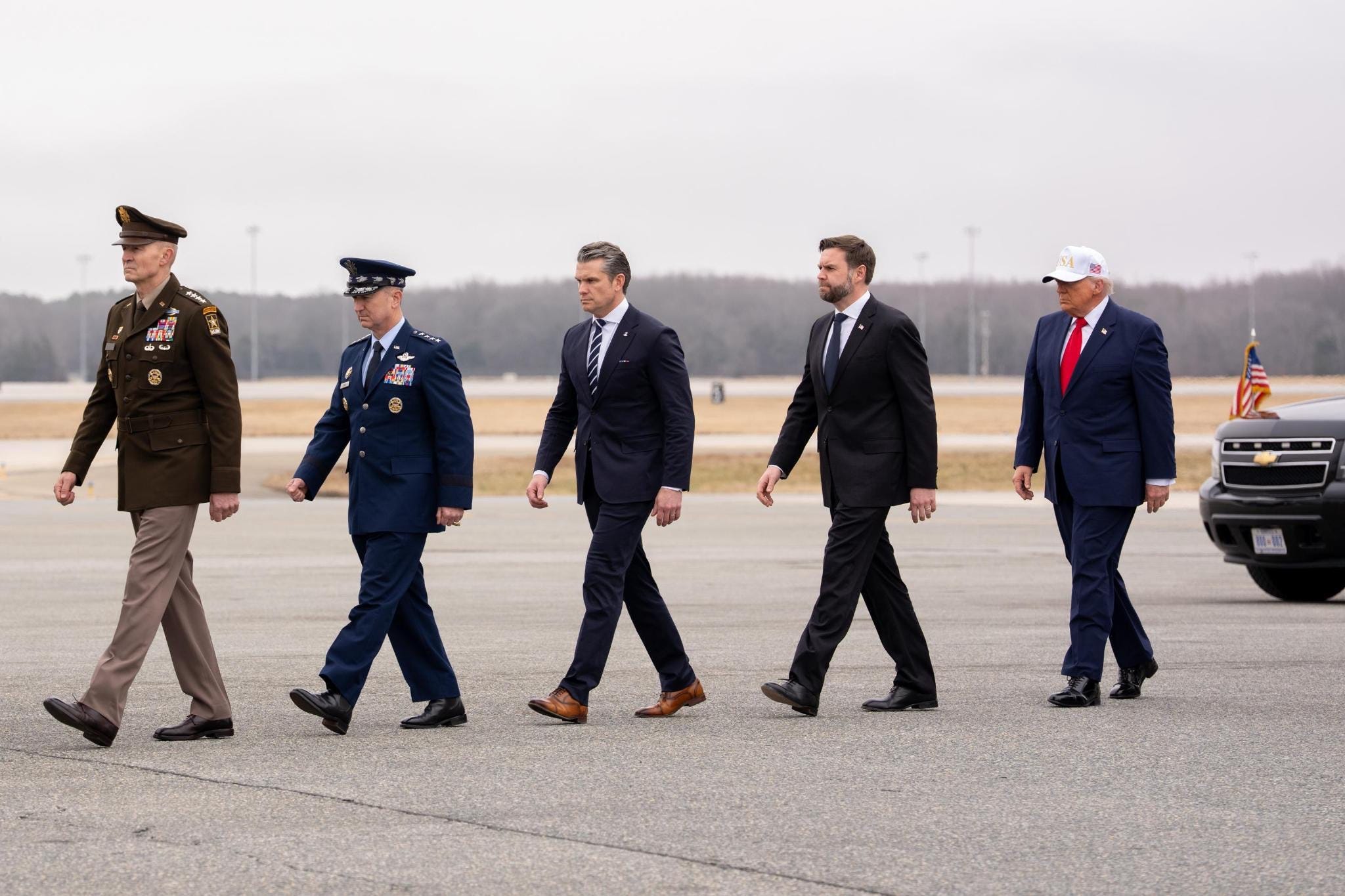
The images emerging from the Middle East tell only part of the story. Behind the footage of airstrikes and missile defenses being repositioned lies a deeper, more consequential shift in the global order.
The United States, long the undisputed architect of international security, is revealing a fragility that the world has never witnessed before. The decision to relocate THAAD batteries and Patriot missile systems from South Korea to the Middle East has sent shockwaves through diplomatic corridors from Seoul to Brussels. While seemingly benign, it exposes one important thing: American military resources are not infinite, and when the pressure mounts, some allies will be left exposed.
The Shield Is Gone
The strikes on American air defense systems represent more than tactical losses. They constitute a strategic shock that the Pentagon has struggled to explain to the American people. In less than two weeks since the war began, America has taken considerable equipment loss and depletion to a seemingly much weaker nation.
Multiple AN/TPY-2 antenna’s have been damaged throughout the gulf region including Saudi Arabia, UAE, Jordan and Abu Dhabi. The gulf countries also announced that they only have a few days of interceptors left if the pace of attacks keeps up. This has sent CENTCOM into a panic as they divert and race to the finish line to take out as many of Iran’s launchers as possible.
As munitions specialist N.R. Jenzen-Jones of Armament Research Services told CNN: “The AN-TPY/2 radar is essentially the heart of the THAAD battery, enabling the launch of interceptor missiles and contributing to a networked air defense picture.”
This will inevitably empower many of the superpowers around the world to be more bold with their actions in the geopolitical scene, as the US is proving to be more of a paper tiger than previously believed. On top of that, nations such as China are using this as the perfect opportunity to monitor and understand how the US military performs strategically in a real war scenario.
The Alliance Question
For decades, the presence of American forces on the Korean Peninsula has served as the cornerstone of Seoul’s security architecture and security in the Indo-Pacific region. As the THAAD defense systems are moved from Seongju and the Patriot batteries from Osan Air Base, this will start to make many of our allies around the world question how much protection the US security umbrella is really providing them. A war with a seemingly much weaker opponent has already got America scrambling to produce more, and concentrate resources.
The details, reported by outlets including the Chosun Ilbo and Korea Times show US military transport aircraft, including C-17 and C-5 cargo planes, spotted at Osan Air Base. Reports citing government sources indicated that several Patriot missile defense launchers and interceptors had been moved from other American bases in the country to Osan..
As reports confirm that Washington and Seoul have discussed redirecting USFK assets to the Iran war, the message to Pyongyang is unmistakable. North Korea, watching closely, sees an opportunity. The strategic flexibility that the US has long touted as a strength is now being interpreted as a weakness. When American air defenses are needed in one theater, they must be stripped from another. The deterrent, it turns out, has limits.
The same anxiety ripples across Europe. NATO allies who have grown accustomed to American security leadership are beginning to recalibrate. If the United States can withdraw defensive systems from a key Indo-Pacific partner to fight a war in the Middle East, what happens when Europe faces its own crisis? The unspoken question hangs in the air: Are we next?
Iran Changes the Calculus
Perhaps the most profound implication of this conflict is what it has revealed about American military supremacy. For years, the assumption that the US military was an unstoppable force shaped strategic calculations worldwide. Nations that considered challenging Washington knew the consequences would be swift and devastating.
Iran has shattered that assumption.
Despite massive airstrikes and the deployment of advanced interceptor systems, Tehran has demonstrated a remarkable capacity to absorb punishment and continue operations. The Islamic Republic’s ability to sustain its defense, even as US munitions stocks are depleted, sends a chilling message to other potential adversaries.
According to defense analysts, the United States expended between 20 and 50 percent of its available THAAD interceptors during the initial phases of the 2025 conflict. Production rates for advanced interceptors remain vastly outpaced by Iranian ballistic missile manufacturing. Each THAAD missile costs more than $12.8 million, and American defense contractors produce only 96 a year. The Trump administration has allocated funds to increase their production to 400 a year, but this could take up to seven years.
This shows also shows adversaries the strategy to deal with America. It is less about the technology, and more about being able to out produce and out maneuver the United States through circumvention of their technology, something China exceedingly is good at. Produce it cheaply, produce it fast, and hide it the best you can.
The New Strategic Landscape
The United States seeks controlled brinkmanship, pushing for negotiated settlements while avoiding open-ended commitments. Israel pursues structural destabilization, seeking to fundamentally alter the conflict’s framework. Iran forces a war of attrition, betting on endurance over escalation. The Gulf states fight to preserve economic continuity.
These strategic logics collide on the same battlefield, creating instability precisely because each actor believes it is acting rationally. The danger lies not in miscalculation but in the convergence of rational strategies that produce irrational outcomes.
For China, Russia, and North Korea, the lesson is clear: American commitments are contingent on American priorities. When those priorities shift, allies are left to fend for themselves. This has been never more clear for the gulf countries who aligned themselves with the US in hopes of a security defense structure.
The one thing the Iran war has done is changed the strategic landscape of the world. The shield that kept the peace is showing cracks, and we are entering into a new era.
European Council President Antonio Costa put it bluntly: “So far, there is only one winner in this war – Russia.” He noted that Moscow gains new resources to finance its war against Ukraine as energy prices rise, profits from the diversion of military capabilities that could otherwise have been sent to support Ukraine, and benefits from reduced attention to the Ukrainian front as the conflict in the Middle East takes centre stage.
Between February 28, when the US and Israel started the Iran War, and March 10, oil prices jumped as much as 64 percent—from approximately $72.48 per barrel to a peak of $119.50 per barrel.
A World on Edge
We are living through a fundamental reordering of international relations. The post-Cold War era, characterized by American unipolarity and the steady expansion of Western influence, is giving way to something more chaotic and uncertain.
The rules that governed state behavior for decades are being rewritten in real time.
The implications extend far beyond the battlefield. Global supply chains, already strained by regional conflicts, face new disruptions. Energy markets react to every escalation. Diplomatic channels, strained by mistrust, struggle to contain the spillover. The world economy, still recovering from pandemic-era shocks, confronts a new era of instability.
And yet, for all the uncertainty, one thing is becoming clear: the era of American hegemony is coming to an end, through its own actions.
The military that was supposed to guarantee security everywhere can now secure nowhere.
The alliances that were supposed to be ironclad reveal their seams under pressure.
The power that was supposed to be unlimited confronts its boundaries.
The Edge of War
The Iran war is not World War III. But it may well be the conflict that makes World War III thinkable.
When the dominant power’s credibility is questioned, when adversaries discover that resistance is possible, when allies begin to doubt commitments, the conditions for larger conflict are established.
History does not always repeat itself. But it often rhymes.
The 1930s taught us that global instability emboldens aggressors, that alliances can fracture under pressure, and that the failure of deterrence can cascade into catastrophe. The lessons were learned once. They may need to be learned again.
Ukrainian President Zelenskyy has already issued distress warnings that a long Iran war could leave Ukraine defenseless. “Everyone understands that a long war, if it is long, and the intensity of hostilities will affect the number of air defenses for us,” he told reporters.
What happens next depends on choices not just in Washington and Tehran, but in Beijing, Moscow, Pyongyang, and dozens of capitals around the world.
The old order is dying. What replaces it is not yet clear.
But one thing is certain: the world is more dangerous today than it was a year ago, and the trajectory points toward more peril ahead.
The question is no longer whether the world order is changing. The question is whether it can be changed without descending into the abyss, without the suffering of millions.